Remember that feeling of wanting to learn something new, like maybe that cool song you heard on the radio? Starting to learn playing the piano is a bit like that. It might seem like a huge mountain to climb, but with a little guidance, it can be an amazing and rewarding experience. This guide will explore the essentials of starting your piano adventure, from basic techniques to fun practice tips. You’ll gain a solid foundation, find out how to read music, and discover how to choose the right piano. Get ready to turn your musical dreams into reality and learn to playing the piano!
The First Steps in Piano Lessons
The first steps in learning to play the piano involve getting familiar with the instrument and basic music concepts. Before you start playing complex pieces, there are key things you should become familiar with. This includes the piano layout and how the notes are arranged, essential for reading music. You will also look at how to position yourself comfortably at the piano and begin to develop good posture, key for avoiding physical strain and ensuring proper technique as you learn. Starting with these basics provides a great beginning to your piano skills.
Understanding the Piano Keyboard
The piano keyboard is a world of black and white keys, each producing a different sound. The white keys are the natural notes – A, B, C, D, E, F, and G – repeated across the keyboard. The black keys are grouped in twos and threes, and they represent sharps and flats, which are used to create the different musical keys. The keyboard generally has 88 keys, spanning over seven octaves, providing a vast range of notes for playing. This layout creates patterns that are extremely useful when learning to read music and developing finger dexterity. Comprehending this layout helps you to easily find notes and scales.
- Identifying the Notes: Learning to quickly recognize the notes on the staff and how they correspond to the keys on the piano is a vital skill.
- Finding Middle C: Middle C is the most important landmark. It is the central note on the piano, and also helps in orienting your hand positions.
- Recognizing Octaves: An octave is a set of eight notes. Recognizing octaves helps find corresponding notes throughout the keyboard.
- Understanding Sharps and Flats: Sharps (#) raise a note by a half step, while flats (♭) lower it by a half step. These are mostly found on the black keys.
Proper Posture and Hand Positioning
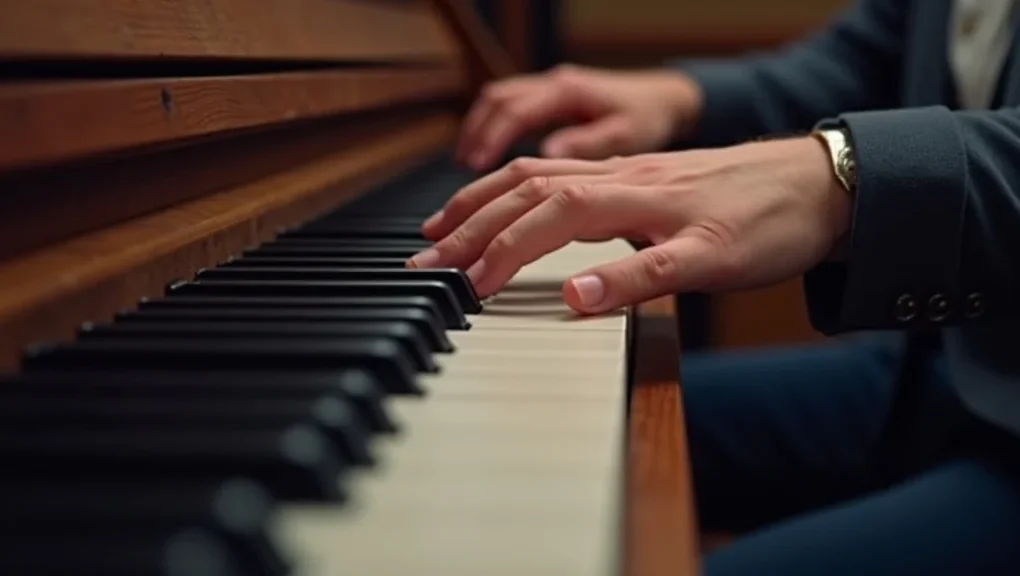
Good posture and hand positioning are essential for playing the piano comfortably and avoiding injuries. You should sit on the piano bench with your back straight, feet flat on the floor, and arms relaxed at your sides. Your wrists should be level with the keyboard, not too high or too low. This allows your fingers to move freely and strike the keys with the correct amount of force. Correct posture and hand positioning are the foundation of good piano technique and prevent repetitive stress injuries.
- Sitting at the Right Height: Adjust the bench to a height where your elbows are at the same level as the keys when your arms are at your sides.
- Curved Fingers: Gently curve your fingers, as if you’re holding a small ball. This position provides maximum control.
- Relaxed Shoulders: Keep your shoulders relaxed and avoid any tension.
- Wrist Flexibility: Allow your wrists to be flexible to absorb the impact of playing and ensure a smooth feel.
Reading Musical Notation
Reading music is like learning a new language. The staff, clef, notes, and rhythms are all part of the musical alphabet. Learning to read music is essential for playing piano, as it allows you to understand the composer’s intentions and play a wide range of songs. Practicing and improving your sight-reading skills helps you play new pieces faster. It also helps in improving your musical memory and overall musicianship.
Understanding the Staff and Clefs
The staff is a set of five horizontal lines and four spaces on which musical notes are written. The treble clef, or G clef, is used for higher notes and typically represents the right hand, and the bass clef, or F clef, is used for lower notes and typically represents the left hand. Each line and space on the staff represents a specific note. Memorizing the lines and spaces is a key first step. There are simple ways to remember the notes. Understanding these fundamentals helps you understand the basics of reading music.
- Treble Clef: The lines on the treble clef are E, G, B, D, F (Every Good Boy Does Fine), and the spaces are F, A, C, E (FACE).
- Bass Clef: The lines on the bass clef are G, B, D, F, A (Good Boys Do Fine Always), and the spaces are A, C, E, G (All Cows Eat Grass).
- Ledger Lines: These short lines are used to extend the staff for notes that fall outside of the five lines and four spaces.
- Clef Placement: Clefs determine the pitch of the notes on the staff.
Note Values and Rhythms
Notes have different durations, indicating how long they should be held. These durations are indicated by their appearance on the staff. Whole notes, half notes, quarter notes, and eighth notes each have different time values and are used to create the rhythm of the music. Learning to recognize and count these note values is key to understanding the beat and rhythm of a piece. Mastering rhythms allows you to play with precision and improve your coordination.
- Whole Note: Represents four beats.
- Half Note: Represents two beats.
- Quarter Note: Represents one beat.
- Eighth Note: Represents half a beat.
- Time Signature: Tells you how many beats are in each measure and what kind of note gets one beat.
Reading Key Signatures
Key signatures show which sharps or flats are applied to notes within a piece of music. They are located at the beginning of each staff. Key signatures save time and make reading music easier. They also show which key the piece is in. The key signature directly influences the way a piece sounds. Learning to read and identify key signatures is key to understand the musical context.
- Sharps: Arranged in a specific order: F#, C#, G#, D#, A#, E#, B#.
- Flats: Arranged in the opposite order: Bb, Eb, Ab, Db, Gb, Cb, Fb.
- Identifying the Key: The key signature helps you know the key of the piece.
- Enharmonics: Understanding how keys can have multiple names.
Basic Piano Techniques
Mastering basic techniques gives you the ability to play smoothly and accurately. These include finger exercises, scales, and chords. Practicing these techniques helps to develop finger strength, coordination, and musical understanding. These will also help you in playing more difficult pieces. Building a foundation in these areas is crucial for progress.
Finger Exercises for Dexterity
Finger exercises build finger strength, dexterity, and coordination. These exercises may seem simple, but they are vital for developing proper technique. Common exercises include playing scales and arpeggios, which improve finger independence and strengthen the hands. Starting with simple exercises will help you progress to more complex techniques. Practicing these consistently can improve your skills and technique and avoid injury.
- The C Major Scale: A simple scale to start with, using all white keys.
- Finger Numbers: Assigning a number to each finger (1-thumb, 2-index, 3-middle, 4-ring, 5-pinky).
- Practice Slowly: Begin slowly and focus on accuracy, gradually increasing speed.
- Use a Metronome: Use a metronome to keep a steady beat.
Playing Scales and Arpeggios
Scales and arpeggios are patterns of notes that help develop finger strength, coordination, and musical understanding. Scales are a series of notes in a specific order, and arpeggios are the notes of a chord played separately. Regularly practicing scales and arpeggios is essential for improving technical skill. Practicing these patterns also improves your ability to play more complex pieces. Regular practice helps in developing technical proficiency and also in ear training.
- Major Scales: Start with the C Major scale (no sharps or flats).
- Minor Scales: Learn natural, harmonic, and melodic minor scales.
- Arpeggios: Practice playing the chords in broken form.
- Two-Octave Practice: Play scales and arpeggios over two octaves for increased finger strength.
Understanding Chords and Chord Progressions
Chords are a group of notes played together to create harmony. Basic chords include major, minor, and seventh chords, which are the building blocks of most music. Chord progressions are a sequence of chords that create the structure of a song. Learning chords and chord progressions is essential for accompanying songs and playing music with others. This also helps develop a deeper understanding of music theory.
- Major Chords: Constructed with the 1st, 3rd, and 5th notes of a major scale.
- Minor Chords: Constructed with the 1st, flat 3rd, and 5th notes of a major scale.
- Seventh Chords: Include the 1st, 3rd, 5th, and 7th notes of a scale.
- Chord Progressions: Practice common progressions, like I-IV-V.
Choosing a Piano
Choosing the right piano is a crucial decision for any aspiring musician. The type of piano you choose will impact your learning and practice experience. Pianos range in size, cost, and features. The best choice depends on your space, budget, and learning goals. It’s important to research and compare different pianos to find one that meets your needs.
Types of Pianos
There are several types of pianos, each with its own advantages and disadvantages. These include acoustic pianos, digital pianos, and hybrid pianos. Acoustic pianos, such as grand pianos and upright pianos, provide the feel of a traditional piano. Digital pianos offer the convenience of electronic features and are also a more affordable alternative. Hybrid pianos are a mix of both. Considering these differences allows you to choose the best option for your needs and budget. Each has its specific advantages.
- Acoustic Pianos: These include grand pianos (larger, best sound) and upright pianos (more compact, suitable for home use).
- Digital Pianos: These offer a range of sounds and features, often with weighted keys.
- Hybrid Pianos: These combine acoustic and digital technologies for an enhanced experience.
- Portability: Some digital pianos are more portable than others, and also good for beginners.
Factors to Consider When Buying a Piano
Before purchasing a piano, take into account your budget, available space, and also your long-term goals. Consider the features of a digital piano, such as its sound quality, the feel of the keys, and added features, such as headphone jacks. For an acoustic piano, consider the size, brand, and also the overall condition of the instrument. Comparing different models can make your choice easier. This helps to make sure you get the best piano for your needs.
- Budget: Determine how much you are willing to spend.
- Space: Measure the space available for the piano.
- Sound Quality: Try to listen to the piano or read reviews.
- Key Action: Make sure the keys feel good to play.
- Features: Consider features like headphones jacks and also recording capabilities.
Buying a Used Piano vs. New
Buying a piano can be a big decision, and deciding between a used and new piano involves its own set of considerations. A used piano can be more budget-friendly. However, it may require maintenance or have wear and tear. A new piano has the benefit of being in perfect condition. It usually comes with a warranty. Depending on your needs and budget, the decision between new and used should be carefully weighed. Both options present their benefits.
- Used Pianos: Can be a great value but may require maintenance.
- New Pianos: Come with warranties but are more expensive.
- Inspection: Always have a used piano inspected by a technician.
- Longevity: Pianos that are well cared for can last for years.
Effective Practice Techniques
Consistent, focused practice is key to making progress. Developing good practice habits and using effective practice techniques will speed up the learning process and make it more enjoyable. This involves setting goals, choosing the right material, and also knowing how to stay motivated. By following these, you can make the most of your practice time and achieve your musical goals.
Setting Practice Goals
Setting realistic practice goals and making a schedule is essential for staying on track. Start by setting short-term and long-term goals to have something to aim for. Divide the practice time into sections, such as scales, sight-reading, and working on pieces. Tracking your progress, through journaling or even recording your playing, can provide motivation. Having well-defined goals helps you stay committed and also make the most of your practice time.
- Short-Term Goals: Examples: learn a specific measure, master a scale.
- Long-Term Goals: Examples: play a certain song, complete a recital.
- Practice Schedule: Set aside specific times for practice each day or week.
- Track Progress: Keep a practice log to monitor your progress.
Breaking Down Complex Pieces
Breaking down a complex piece into smaller sections is an effective practice strategy. Start by dividing the piece into manageable sections, such as phrases or measures. Practice each section separately, slowly at first. Focus on accuracy before increasing the tempo. Gradually combine the sections until you can play the whole piece. This approach helps with the learning of complex songs.
- Sectioning: Divide the piece into smaller, manageable parts.
- Slow Practice: Play each section slowly, and concentrate on accuracy.
- Hand Separation: Practice hands separately to master each part.
- Gradual Tempo Increase: Once the piece is accurate, slowly increase the tempo.
Staying Motivated and Focused
Staying motivated and focused is an ongoing process. Setting a goal, enjoying the process, and also celebrating small achievements can help. Vary your practice by choosing songs you enjoy and by listening to piano music. Find a practice routine. Joining a piano lesson, joining a group, or even performing can also help to stay motivated and reduce boredom. The key is to find strategies that make practicing fun.
- Choose Music You Enjoy: Play music you like to stay engaged.
- Take Breaks: Take regular breaks to avoid burnout.
- Reward Yourself: Celebrate your achievements.
- Find a Teacher: A good teacher provides valuable feedback.
Frequently Asked Questions
Question: How long should I practice each day?
Answer: It’s best to practice consistently. A shorter, more regular practice (e.g., 20-30 minutes daily) is generally better than long, infrequent sessions.
Question: What’s the best way to learn to read music?
Answer: Start with the basics: learn the staff, clefs, and note values. Practice sight-reading regularly, starting with simple pieces.
Question: Should I take piano lessons?
Answer: Yes, piano lessons are highly recommended. A teacher can offer personalized guidance, correct your technique, and also keep you motivated.
Question: How do I improve my finger strength?
Answer: Practice finger exercises (scales, arpeggios, Hanon) consistently. Start slowly and gradually increase speed and also practice with proper posture and technique.
Question: What do I do when I make mistakes?
Answer: Don’t get discouraged. Identify the mistake, slow down, and practice the problem areas repeatedly. Remember, mistakes are a part of learning, use them to improve.
Final Thoughts
Learning playing the piano is a fantastic endeavor, offering a world of creativity and personal satisfaction. We have seen how to begin, from the layout of the piano to understanding musical notation. Remember to begin with the basics, mastering finger techniques and also practicing scales, chords, and simple songs. Choosing the appropriate piano, and establishing effective practice habits are also key. Be patient with yourself, embrace the challenges, and celebrate your progress. Every step, from recognizing notes to playing your first piece, is a triumph. The ability to express yourself through music is a rewarding and long-lasting skill. Pick a song and start playing the piano today!