Remember that feeling of seeing a beautiful piano and dreaming of making music? Maybe you imagined yourself effortlessly playing piano, filling a room with sound. This guide is your starting point, designed to transform those dreams into reality. We’ll explore everything from the basics to more advanced techniques, helping you build a solid foundation. Get ready to explore the exciting possibilities that playing piano offers, and learn how to begin or improve your skills. You’ll gain a thorough overview of the instrument, its capabilities, and how to start playing right away. This will help you begin your musical adventure and give you the resources to keep improving!
The Foundations of the Keyboard
Before you even touch a key, it’s essential to grasp the basics. The piano keyboard looks complicated at first, but it follows a logical pattern. Once you understand this pattern, you’ll be well on your way to learning how to play. The arrangement of black and white keys corresponds to different musical notes and scales. Developing this initial framework is crucial for future development, like knowing a language’s alphabet before you can write a book. We’ll explore the organization of notes and how they function.
Understanding the Key Layout
The keyboard is structured with repeating patterns of black and white keys. The white keys represent the natural notes (A, B, C, D, E, F, and G). The black keys are arranged in groups of two and three and represent sharps and flats. These sharps and flats alter the pitch of the natural notes. These alterations are vital for creating musical diversity. Each group of notes is a specific octave, and understanding this pattern is fundamental to note recognition and scale production. Familiarizing yourself with these groups helps in learning scales, chords, and music theory.
- White Keys: These represent the seven basic notes (A through G). They form the core of scales and melodies.
- Black Keys: These sit between the white keys and represent sharps and flats, adding more color and complexity.
- Octaves: The pattern of black and white keys repeats across the keyboard, forming octaves. Each octave has the same notes but at a different pitch.
- Middle C: This note is a common reference point and a good place to begin learning hand placement.
Knowing the layout of the keyboard will help you to recognize notes and develop finger memory. Finger memory is essential for swift playing. It’s like learning the letters of the alphabet and knowing where they are without thinking about it. Once you know the keyboard layout, finding notes on the piano will soon become second nature.
Deciphering Music Notation
Music notation is the written language of music. It’s how composers communicate their ideas to performers. It contains information about pitch, rhythm, dynamics, and other musical aspects. Learning to read music is like learning another language. While it can seem complex at first, with practice, you will become comfortable with the notes. Becoming familiar with these symbols can significantly improve your ability to learn new pieces and develop your musical skills. This skill is as important as knowing the keys themselves.
- The Staff: Music is written on a staff of five lines and four spaces. Each line and space represents a different note.
- Clefs: The treble clef is used for higher notes, often played with the right hand. The bass clef is used for lower notes, typically played with the left hand.
- Notes: These indicate the pitch and duration of a sound. Different note shapes represent different note values.
- Rhythm: The length of notes is indicated by their shape (whole notes, half notes, quarter notes, etc.).
Regular practice of reading notation can improve your sight-reading skills. This involves quickly and accurately interpreting the notes, rhythms, and other symbols in the music. The faster you become, the more music you will be able to perform. This also means you can play more pieces without needing to rely on a teacher.
Building Your Piano Skills
Learning how to play the piano requires regular practice and the development of specific skills. Developing a regular practice schedule and setting achievable goals is key. This section will guide you through the process of developing skills, from sitting correctly to playing chords. The more time you dedicate to practice, the more your abilities will grow. Every step you take adds to your skill set, allowing you to progress to more complex musical pieces.
Proper Posture and Hand Position
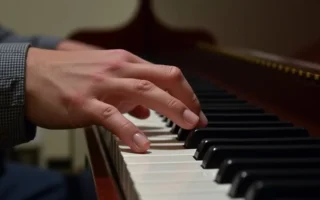
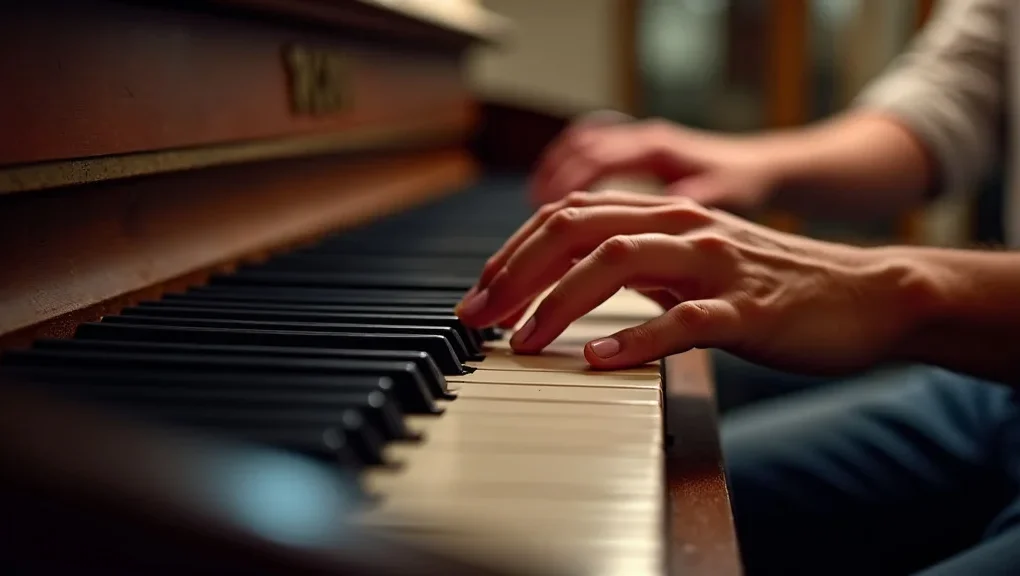
Good posture and hand position are vital for efficient playing and avoiding injuries. If you don’t sit correctly, you’ll be uncomfortable, and your playing won’t be as good. Correct posture also prevents potential health problems. The piano bench should be at a height where your forearms are roughly parallel to the floor when your elbows are at your side. Your wrists should be relaxed and your fingers curved, ready to strike the keys. This technique is similar to how a basketball player holds the ball.
- Sit Upright: Keep your back straight, but relaxed. Avoid slouching.
- Arm Position: Your elbows should be at your sides and your forearms parallel to the floor.
- Hand Curve: Imagine holding a ball; your fingers should be slightly curved, not flat or overly arched.
- Wrist Flexibility: Keep your wrists relaxed and flexible to avoid strain.
Proper posture will make your playing more efficient and help prevent strain injuries. When you play with relaxed shoulders, wrists, and fingers, your body will be more relaxed, and you will be able to play for longer. This will help prevent fatigue and ensure you can practice for extended periods without harm.
Practicing Scales and Exercises
Scales and exercises may seem boring at first, but they are vital for developing technique and finger strength. Regular practice of scales and exercises helps build a strong foundation for more advanced playing. Scales improve finger dexterity, coordination, and timing, allowing for smoother and more consistent playing. Like an athlete trains, your fingers need conditioning to perform different musical pieces.
- Scales: Practice major and minor scales in different keys. This helps you to learn the different note patterns.
- Arpeggios: Practice playing the notes of a chord individually in a flowing manner.
- Finger Exercises: These exercises, often called Hanon or Czerny, are designed to build finger strength and coordination.
- Rhythm Training: Using a metronome helps to develop a steady tempo and improves your sense of rhythm.
Scales and exercises will improve your finger dexterity and coordination. By regularly practicing, you’ll gain the physical strength and mental control needed for playing more complex pieces. They also help to build familiarity with note patterns, preparing you for more intricate music. This regular practice makes playing more enjoyable.
Exploring Chords and Harmony
Once you are comfortable with individual notes, it is time to move on to chords. Chords are a key part of music, creating depth and richness in every piece. Learning how to form chords and understand their relationships will allow you to play countless songs. This opens up a world of musical expression and allows you to create your own compositions or improvise. With some effort, you can quickly learn how to play popular songs.
Understanding Chord Formation
Chords are a group of notes played simultaneously. Basic chords are built on the principles of intervals and major and minor triads. The most common chords consist of three notes: the root, the third, and the fifth. Major chords sound happy, while minor chords sound more somber. Knowing chord structures will enable you to understand and play many songs. This is a crucial step towards becoming an accomplished pianist.
- Major Chords: These are formed by taking the root, major third, and perfect fifth of a scale.
- Minor Chords: These are formed by taking the root, minor third, and perfect fifth.
- Chord Inversions: These are different ways of playing the same chord, with the notes in a different order.
- Chord Progressions: These are sequences of chords that create a musical flow.
Understanding chord formation enables you to create and play a wide variety of music. Knowing these fundamental chord structures will also enable you to play many popular songs. It’s like learning the building blocks of music. You’ll gain a deeper appreciation of music as you start recognizing the chord patterns and sequences in your favorite tunes.
Applying Chords to Songs
Once you understand chord structure, the next step is to apply chords to songs. Learning to play chords is like learning a new language. You start with the words (chords) and then learn how to combine them into sentences (songs). There are numerous resources available for beginners, like chord charts or apps, that can help you learn a specific song.
- Find a Chord Chart: Many websites provide chord charts for popular songs.
- Identify the Key: This will help you know what chords to use.
- Practice the Chord Changes: Transition smoothly between chords at the correct tempo.
- Play Along with the Recording: This helps you develop rhythm and timing.
Applying chords to songs enhances your musical enjoyment and performance abilities. As you become more comfortable, you can start experimenting with different chord voicings and adding your own personal style. It’s a satisfying experience to hear the sounds you are making match those of the songs you love. It allows you to transform musical pieces into real performances.
Developing Your Musicality
Beyond technique and theory, the most important aspect of music is musicality. This encompasses expressiveness, dynamics, and interpreting the music. Musicality means adding feeling and character to your playing. It transforms the notes into an expressive performance. By focusing on musicality, you’ll be able to communicate emotions to others.
Using Dynamics and Expression
Dynamics and expression are how you use variations in volume and feeling in your playing. Playing with expression involves changing the volume, tempo, and articulation of the music. Without expression, music can sound dull or robotic. It’s the difference between speaking and singing. The careful use of dynamics and expression brings music to life, drawing listeners into the piece. Your feelings about the piece should be conveyed in how you play.
- Dynamics: Use louds (forte) and softs (piano) to create contrast and emotional impact.
- Tempo: Adjust the speed of the music to match the mood.
- Articulation: Vary how you play notes, such as legato (smoothly) or staccato (short and detached).
- Phrasing: Think about the musical “sentences” and how to shape each phrase.
These techniques help you bring music to life, making it more engaging for both the performer and the listener. The dynamics bring emotion to a song, and the correct articulation can really enhance the piece. Practicing with dynamics will help you understand how music can express your emotions, providing you with a means of self-expression.
Exploring Different Musical Styles
There are many genres of music, each with its unique characteristics and style. Exploring diverse musical styles broadens your musical knowledge and skills. It also helps you to discover which genres resonate with you the most. Exploring different genres can significantly enhance your experience with playing piano. Each style offers a different approach to the piano, and this will enhance your appreciation of music.
- Classical: Focuses on formal structures, elegant melodies, and complex harmonies.
- Jazz: Emphasizes improvisation, syncopation, and unique chord voicings.
- Pop: Uses catchy melodies, simple chord progressions, and modern rhythms.
- Blues: Features the use of the blues scale, improvisation, and soulful expression.
Exploring various styles will enrich your musical experience and open you up to new creative possibilities. The best way to learn these styles is to immerse yourself in the music. Listen to different genres and experiment with playing them. This exposure to various styles will widen your understanding of music and will allow you to develop a more flexible and adaptable playing style. You will increase your enjoyment of music and improve your skills.
Frequently Asked Questions
Question: How often should I practice to see results?
Answer: It’s best to practice regularly, even if it’s just for 15-30 minutes each day. Consistency is more important than the length of each practice session.
Question: What’s the best way to start learning?
Answer: Begin with the basics: learn the keys, read music notation, and practice scales and exercises. Consider taking lessons from a teacher.
Question: How long does it take to learn how to play piano?
Answer: It depends on your dedication and practice. Basic skills can be learned in a few months, but mastering the instrument is a lifelong pursuit.
Question: Should I take piano lessons?
Answer: Yes, lessons from a teacher provide personalized guidance and structure, helping you avoid bad habits and accelerate your progress.
Question: What kind of piano should I get?
Answer: If you’re starting out, an acoustic piano or a digital keyboard with weighted keys is ideal. Choose an instrument that fits your budget and space.
Final Thoughts
The journey of playing piano is incredibly rewarding. It is not just about learning how to play notes; it’s about expression and connecting with yourself and others through music. Whether your goal is to play a favorite song or create your own compositions, the knowledge gained from this guide will set you in motion. Remember that consistency and patience are vital. The more you explore, the more you will discover about music. Embrace the process, don’t be afraid to experiment, and enjoy the beautiful sounds you will create. Keep practicing, and you’ll find yourself making music in no time. The effort is worth it when you hear the sounds you’ve created.