Remember that feeling when you first sat in front of a piano, maybe at a friend’s house or a music store? The shiny keys, the promise of creating beautiful music… it’s exciting! Perhaps you’ve always wanted to learn, or maybe a recent song sparked your curiosity. This guide is all about how to learn piano yourself, even if you’ve never touched a key before. We’ll explore the steps, resources, and mindset you need to turn your piano dreams into reality, providing you with practical advice and actionable steps to get started right away. Get ready to explore the exciting path of learning the piano!
Getting Started on Your Piano Journey
The first step in your piano adventure is setting the stage. This involves acquiring an instrument (or finding a practice space), familiarizing yourself with the basic components, and establishing a consistent practice schedule. You’ll learn about different piano types, the importance of posture, and how to read the most basic music notation. It can feel like a lot at the beginning, but with a clear plan, you can begin making progress immediately.
Choosing Your Instrument
Selecting the right instrument is important. You’ve got options, each with pros and cons. A full-sized acoustic piano is the gold standard, offering the best sound and feel. However, they’re big, expensive, and require regular tuning. Digital pianos offer a more affordable and convenient solution. They mimic the feel of an acoustic piano, often including weighted keys, and have built-in features like different instrument sounds and headphone jacks for silent practice. They also require less maintenance. Finally, smaller, cheaper options exist, but often lack the full range of keys and the weighted feel that is important for building good habits. The best choice depends on your budget, space, and personal preferences.
- Acoustic Pianos: These are the traditional instruments with real strings and hammers. They deliver rich, resonant sounds but demand more space and upkeep.
- Digital Pianos: These use electronic components to simulate the sound and feel of an acoustic piano. They’re more affordable, require less maintenance, and often include helpful features like headphones and metronomes.
- Keyboard (Non-Weighted): Often cheaper and portable, these have a lighter touch and less dynamic range, making them less ideal for serious piano study.
- Weighted Keys: Weighted keys is a term to describe keyboards with a mechanism that mimics the resistance of acoustic pianos. This feature simulates the feel of a real piano, which is important for developing proper finger strength and technique. This feature is more commonly found on digital pianos.
Piano Basics: Posture and Hand Position
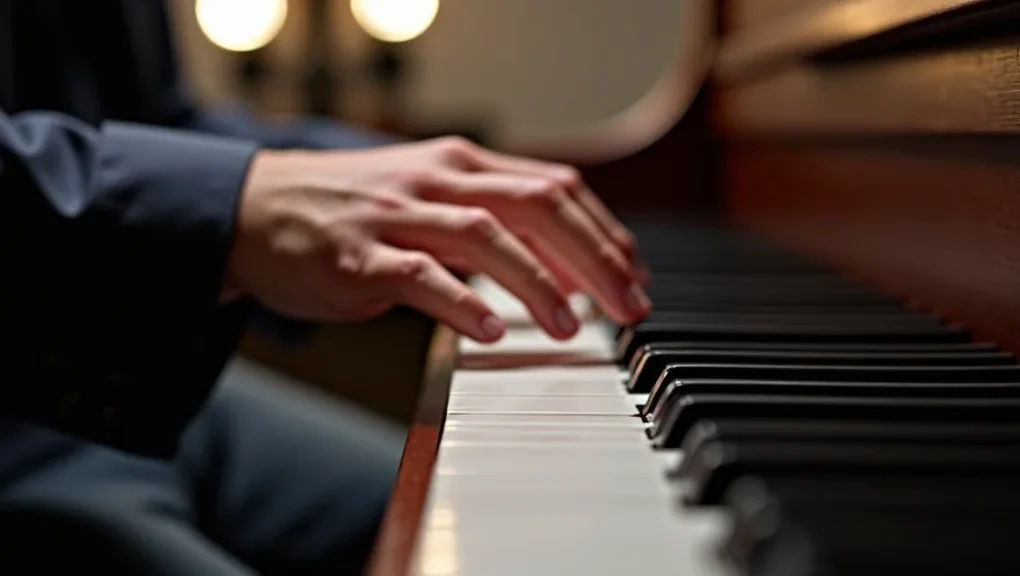
Correct posture and hand position are vital for preventing injuries and achieving good technique. Sit tall, but relaxed, on the piano bench with your feet flat on the floor or a footrest. Your elbows should be slightly away from your body, and your wrists should be level. Imagine holding a ball in each hand – that’s roughly the correct shape for your hand position. Your fingers should curve naturally, with the tips ready to strike the keys. Improper posture can lead to muscle strain and can hinder progress, so it’s something to work on from the beginning.
- Back Straight: Maintain a straight but relaxed back. Avoid slouching, as this can impede breathing and affect your arm and hand movements.
- Feet Placement: Your feet should be flat on the floor (or on a footrest), providing a stable base. This helps maintain balance and good posture.
- Elbows: Keep your elbows slightly away from your body. This allows for freedom of movement and prevents unnecessary tension.
- Wrists: Your wrists should be level, neither too high nor too low. A relaxed wrist allows for smoother playing and dynamic control.
- Curved Fingers: Curve your fingers naturally, as if holding a small ball. This provides the best leverage for striking the keys and helps prevent injury.
Establishing a Practice Routine
Consistency is key to mastering the piano. Create a practice schedule that fits your life, even if it’s just 15-30 minutes a day. This is better than long, infrequent sessions. Choose a regular time when you’re less likely to be disturbed. Begin with warm-up exercises like scales and arpeggios, then work on pieces you’re learning. Set achievable goals for each practice session, such as learning a specific passage or mastering a new concept. Regular practice builds muscle memory and improves your musical abilities over time.
- Set a Schedule: Consistency in practice is better than infrequent, extended sessions. Aim for a specific time and duration that you can consistently maintain.
- Warm-Up Exercises: Begin each session with scales and arpeggios to warm up your fingers and prepare them for playing.
- Goal Setting: Set small, achievable goals for each practice session. This keeps you focused and motivated.
- Focus on Difficult Passages: Break down challenging parts of pieces into smaller segments and practice them slowly.
- Listen Actively: Pay attention to the sound you’re producing. Adjust your technique and dynamics to improve your playing.
The Fundamentals of Music Reading
Learning to read music is essential for playing the piano. It’s like learning a new language, but instead of words, you’re using notes, rhythms, and symbols. This section will guide you through the basics of the staff, clefs, notes, and rests. With patience and persistence, understanding music notation will become second nature, unlocking a vast world of musical possibilities. This is how you will start to learn piano yourself through music.
Understanding the Staff and Clefs
The staff is the foundation of music notation. It consists of five horizontal lines and four spaces, where notes are placed. The treble clef (also known as the G clef) is used for higher-pitched notes, typically played by the right hand. The bass clef (also known as the F clef) is used for lower-pitched notes, typically played by the left hand. Memorizing the lines and spaces of the treble and bass clefs is crucial for quickly identifying notes. The lines of the treble clef are remembered using the mnemonic “Every Good Boy Does Fine” (from bottom to top), while the spaces spell “FACE.” In the bass clef, the lines are “Good Boys Do Fine Always” and the spaces spell “ACEG.”
- The Staff: The basic framework of music notation, consisting of five horizontal lines and four spaces. Notes are placed on these lines and spaces to indicate their pitch.
- Treble Clef (G Clef): Used for higher-pitched notes, typically played by the right hand. It curls around the second line (G), giving its name.
- Bass Clef (F Clef): Used for lower-pitched notes, typically played by the left hand. The two dots are placed on either side of the fourth line (F).
- Ledger Lines: Short lines added above or below the staff to represent notes that are too high or too low to fit on the staff.
Notes, Rests, and Rhythms
Notes represent the pitch and duration of a sound. Different note values, such as whole notes, half notes, quarter notes, and eighth notes, indicate how long a note should be held. Rests represent silence, and their values correspond to the note values. Understanding rhythms involves recognizing these note values and accurately counting the beats in a measure. This requires both theoretical knowledge and practical application, with the help of a metronome. Mastering rhythm is key to playing in time and making music sound fluid and expressive.
- Note Values: Notes are symbols that represent the duration of a sound. Different types of notes, such as whole notes, half notes, quarter notes, and eighth notes, indicate how long a note should be held.
- Rests: Rests are symbols that represent periods of silence. They have corresponding values to notes, indicating the duration of the silence.
- Time Signature: Located at the beginning of a piece, the time signature indicates the number of beats in each measure and what type of note gets one beat.
- Metronome: A device that produces a steady beat, used to practice rhythm and improve timing.
Key Signatures and Intervals
Key signatures indicate the sharps or flats that are in a piece of music, which determines the key. Understanding key signatures will help you quickly understand the melody. Intervals are the distance between two notes. They’re measured in the distance between notes, such as a second, third, or fifth. Knowing intervals helps you understand how melodies and harmonies are built, and aids in sight-reading and ear training. You’ll learn the different intervals and how they are used.
- Key Signatures: Sharps and flats placed at the beginning of a piece of music that indicate which notes are to be played sharp or flat throughout the piece. They determine the key of the music.
- Sharps and Flats: Sharps (#) raise the pitch of a note by a half step, while flats (♭) lower the pitch by a half step.
- Intervals: The distance between two notes. They are measured in numbers, such as a second, third, or fifth. Intervals help you understand how melodies and harmonies are built.
- Major and Minor Keys: Keys are categorized as either major or minor, which affects the overall mood of the music. Major keys often sound bright and happy, while minor keys tend to sound somber or melancholic.
Developing Piano Skills and Technique
Once you understand the basic music theory, it’s time to work on piano technique. This is where you develop the physical skills and coordination needed to play the instrument. This section focuses on finger exercises, scales and arpeggios, and sight-reading. Consistent practice and a focus on proper technique will improve your playing ability. A well-rounded technique is key to successfully learn piano yourself.
Finger Exercises and Hand Coordination
Finger exercises, also known as finger drills, are crucial for building strength, dexterity, and independence in your fingers. These exercises help improve coordination between your hands, ensuring your fingers can move independently of each other. Exercises like Hanon and Czerny are common and effective. Start slowly and gradually increase speed. Regular practice with these exercises is the foundation of piano technique. Begin with slow and deliberate movements, gradually increasing the speed as your control improves.
- Finger Independence: Training each finger to move independently from the others. This ensures clarity in your playing.
- Hanon Exercises: A widely used set of exercises designed to build finger strength, agility, and evenness.
- Czerny Exercises: Similar to Hanon, Czerny exercises focus on improving finger dexterity and technical skills.
- Slow Practice: Start exercises slowly and deliberately. This builds accuracy before increasing speed.
Scales and Arpeggios
Scales and arpeggios are not just exercises; they are the building blocks of music. Scales are a sequence of notes in ascending or descending order, forming the basis of a key. Arpeggios are the notes of a chord played one after the other. Practicing scales and arpeggios helps you internalize the patterns and structures of music, which improves your sight-reading skills. Practicing them regularly will enhance your technical ability and improve your musical understanding.
- Major Scales: A sequence of notes that follows a specific pattern of whole steps and half steps, creating a bright and stable sound.
- Minor Scales: Similar to major scales, but follow a different pattern of whole and half steps, creating a more somber sound.
- Arpeggios: The notes of a chord played individually in sequence, helping to develop hand coordination and chord recognition.
- Practice Techniques: Vary the rhythms, dynamics, and articulations while playing scales and arpeggios to enhance your technical skills.
Sight-Reading and Ear Training
Sight-reading is the ability to play music from notation at first sight. It requires you to quickly process the notes, rhythms, and other musical symbols. Ear training involves developing your ability to identify notes, chords, and intervals by ear. It allows you to recognize musical patterns and structures. Combine sight-reading practice with ear training exercises to improve your overall musical skills. These skills will transform your approach to the piano.
- Sight-Reading Practice: Choose simple pieces and gradually increase the complexity of the music you read.
- Ear Training Exercises: Identify intervals, chords, and melodies by ear. This increases your recognition of musical sounds.
- Transcribing: Practice transcribing melodies or chord progressions by ear. This strengthens your auditory skills and understanding.
- Practice Regularly: Dedicate time to both sight-reading and ear training. Consistency will deliver the best results.
Finding Resources and Planning Your Learning
There is a wealth of resources available for those who want to learn piano yourself. You can choose from online courses, apps, books, and even virtual communities. This section guides you through the process of choosing the best learning materials, using them effectively, and finding support. With the right tools and strategies, you can make significant progress.
Online Courses and Apps
Online courses and apps offer a flexible way to learn piano, allowing you to study at your own pace and schedule. There are several popular choices, each with its own advantages. Some apps are game-based, making learning interactive and fun. You can find comprehensive courses that cover everything from beginner fundamentals to advanced techniques. Online courses and apps often include video lessons, interactive exercises, and progress tracking. Consider free trials and compare features to find the best fit for your learning style and goals.
- Video Lessons: Online platforms and apps offer video lessons that teach various skills, from basic techniques to complex music theory.
- Interactive Exercises: Many apps include interactive exercises that provide immediate feedback on your playing.
- Progress Tracking: Some resources track your progress, which helps you stay motivated.
- Flexibility: Online courses provide flexibility, allowing you to learn at your own pace and schedule.
Books and Learning Materials
Books are an excellent resource for learning piano. There are many options, from beginner method books to books on music theory and advanced techniques. Method books typically provide a structured approach to learning, with lessons, exercises, and pieces to play. Choose books recommended by other learners or experienced pianists. Make sure the learning materials match your current skill level, and try to use a combination of books to help you stay interested.
- Method Books: Provide a structured, step-by-step approach to learning piano, covering basics like hand position, note reading, and rhythm.
- Music Theory Books: Focus on the principles of music, including scales, chords, and harmonies.
- Sheet Music: Access a wide range of sheet music for various genres and skill levels.
- Supplementary Materials: Workbooks, exercise books, and music theory resources can enhance your learning.
Finding Support and Motivation
The journey to learning piano can be more enjoyable with support. Look for local piano groups or online communities where you can share your experiences, ask questions, and get feedback. A teacher can provide personalized instruction. Even if you’re learning independently, a teacher can offer guidance. Joining a community of learners can provide support and motivation.
- Online Forums: Share your progress, ask questions, and receive encouragement.
- Local Piano Groups: Connect with other piano learners in your area for in-person support and collaboration.
- Taking Lessons: Though you’re learning yourself, consider periodic lessons. A teacher can offer valuable guidance and feedback.
- Practice Partners: If possible, find a practice partner for added motivation and support.
Frequently Asked Questions
Question: How long does it take to learn piano?
Answer: The time it takes varies from person to person. With consistent practice, you can begin to play simple pieces within a few months. However, mastering the piano is a lifelong pursuit, and the time you spend will depend on your goals and dedication.
Question: What’s the best way to practice?
Answer: Aim for regular, short practice sessions, even if it’s just 15-30 minutes daily. Warm up with scales and arpeggios, then work on pieces you’re learning. Break down challenging sections into smaller parts, and focus on accuracy and consistency.
Question: Do I need to be musically talented to learn?
Answer: Not at all! While natural talent can be a benefit, anyone can learn to play the piano with effort and consistent practice. Don’t be discouraged if things don’t come naturally at first.
Question: What kind of piano should I buy?
Answer: If your budget allows, a full-sized acoustic piano is the best. If space or cost are issues, a digital piano with weighted keys is a good alternative. Make sure the instrument fits your needs and playing environment.
Question: Where can I get sheet music?
Answer: There are many resources. Websites like Musicnotes.com offer a vast library of sheet music for various skill levels and genres. You can also find free sheet music on sites like IMSLP.org.
Final Thoughts
You now have the knowledge and tools to begin your musical journey. Learning to how to learn piano yourself is a rewarding experience. It takes time, persistence, and a love for music. Remember to set realistic goals, celebrate your progress, and be patient with yourself. Don’t worry about perfection; focus on the joy of making music. Keep practicing regularly, explore different genres, and most importantly, enjoy the process. Every note you play, every chord you learn, is a step closer to your goals. Let the music move you. With dedication and a love for music, you can achieve your piano-playing goals.